Business process automation hands repeatable, rule-based work to software so it runs from trigger to completion without a person in the middle. McKinsey research finds demonstrated technologies can fully automate 42% of finance activities and mostly automate a further 19%. This guide covers the how: what to automate first, what the tools do, what it costs, and how to prove the return in 90 days.
For the definition, the history, and how BPA sits against RPA and hyperautomation, read our guide to what business process automation is. That page owns the definition. This one owns the operating question: how to run it.
Which processes to automate first
Start with the process that runs most often, has the fewest exceptions, and costs the most per run. Screen any candidate against four things, in this order.
- Volume. A process that runs thousands of times a month repays automation faster than one that runs weekly.
- Standardisation. Fixed rules beat judgement calls. When most runs follow the same steps, software can own them.
- Error rate. Rework is a leading indicator. If a process gets re-keyed or corrected often, automating the rule-bound steps removes the mistakes.
- Manual effort. Count the hours, not the frustration. At a $6.00 median all-in cost per invoice, the per-document spend is real and worth pricing (APQC).
Invoice processing clears all four. It runs constantly, follows fixed rules, and its cost is documented. The cross-industry median cost to process one accounts-payable invoice is $6.00 all-in, measured across 5,846 organisations in APQC’s benchmark database (APQC). IBM and Red Hat point at the same shortlist from different angles. IBM lists financial processing, employee onboarding, and customer acquisition as the classic cases (IBM). Red Hat’s worked examples are fulfilling and invoicing a purchase order, approving a loan application, and onboarding an employee (Red Hat).
How the tools fit together
Business process automation is a stack of tools. IBM’s breakdown is the clearest: RPA, workflow orchestration, BPM, AI, and cloud (IBM).
Workflow orchestration is the spine. It strings the steps together and moves work between systems. RPA does the repetitive tasks. BPM supplies the process model and rules. AI and cloud are the newer layers. Wikipedia traces the same picture as three waves: traditional BPA, then RPA, then hyperautomation, which combines BPA with AI and machine learning so processes run with minimal human intervention (Wikipedia).
Which tool is best is the wrong question. The right question is which job needs automating. Workflow orchestration suits processes that cross systems. RPA suits high-volume, screen-level tasks inside the systems you already run. The AI and machine-learning layer suits the reading and deciding work. Most first waves start with workflow orchestration plus RPA and add the AI layer only where documents or judgement slow the process down. That sequencing is the heart of our business process automation and AI work.
What business process automation costs, and how long it takes
The honest answer to cost is scope-dependent. No cited research prices an implementation without seeing your process and your systems, and neither will we. The research prices the return instead, and the return is where the case gets made.
McKinsey’s work on the finance function gives the ceiling. Demonstrated technologies can fully automate 42% of finance activities and mostly automate a further 19%, and roughly a third of that opportunity is capturable with basic task automation such as RPA (McKinsey). Most of the near-term win is reachable with basic tools.
On the cost side, the invoice benchmark is the cleanest anchor. If your team processes invoices at or near the $6.00 median (APQC), automation that removes the manual steps cuts a real, repeating cost per document. Multiply that by monthly invoice volume for the annual saving, then set it against the licence and setup cost.
Spend is heading up. A Research and Markets forecast sizes the business process automation market at $22.45 billion in 2026, growing to $54.34 billion by 2032, a 15.84% compound annual rate (Research and Markets). That is a vendor market report, so treat the figures as estimates.
One caution on demand. Search interest in business process automation is stable-to-soft, down from a May 2026 peak, and part of the reported drop is a Google sampling artifact. The underlying demand picture is a plateau.
Where it runs: SAP and ServiceNow
The how-to searches cluster around SAP and ServiceNow, and the playbook is the same in both. Start inside the platform you already run. Map the process end to end. Mark which steps are fixed rules and which need a human decision. Automate the rules, keep the judgement with a person, and surface exceptions to a named owner. Neither platform needs replacing to get a first wave of automation done.
A 90-day plan with a named owner and a measurement gate
Automation stalls when no one owns it and no one measures it. Gartner reports hyperautomation is a staple discipline for 90% of large enterprises, while fewer than 20% have mastered measurement (Gartner). The plan below is built to close that measurement gap.
Days 1 to 14: pick and map one process. Choose the highest-volume, most standard process, using the four screens above. Write down every step and mark each one rule-based or judgement. The map is the deliverable, not a wish list.
Days 15 to 45: automate the rule-based steps. Start with workflow orchestration and RPA inside the systems you already run. Keep the judgement steps with a person and route exceptions to a named owner instead of a shared inbox.
Days 46 to 90: measure against a baseline. Record the cost per run and the cycle time before you start, then again at day 90. The return is the gap between the two.
The measurement gate is simple. At day 90, the process either beats its baseline or it does not. Beat it, and you automate the next process. Miss it, and you fix the map before spending more. Let the number decide the next step, ahead of the sponsor’s confidence.
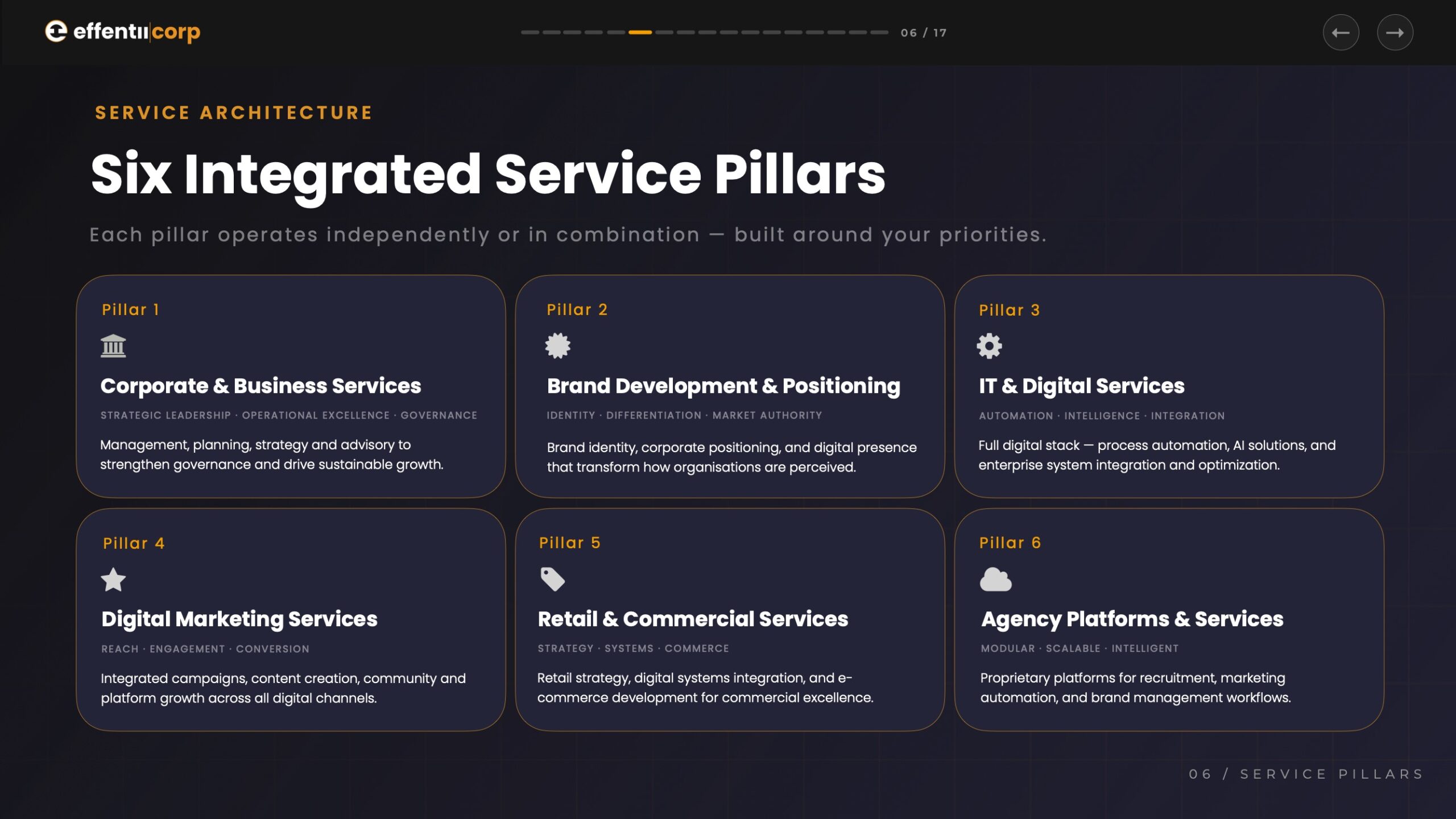
That is how we run it at EFFENTII. We start with one end-to-end process, automate the routine part inside the systems you already have, and build the capability in your team so the work does not depend on us. The approach sits across our six integrated service pillars, and the goal is to make ourselves redundant. That is how EFFENTII works. If you cannot say, for your highest-volume process, which steps are rules and which need a person, that is the first gap to close.