AI agent governance is the gap that stalls agentic AI after the pilot. Only 21% of enterprises have mature AI agent governance, and that gap caps your AI agent ROI. Model quality isn’t the bottleneck; the missing pieces are process, accountability, and audit trails.
Agents are scaling – returns aren’t matching.
AI agents have left the pilot stage. Among organisations above $1 billion in revenue, 40% now scale AI agents in at least one business function, up from 27% a year earlier (McKinsey, reported by Forbes Tech Council). The share reporting a positive EBIT contribution stayed flat at 37% over that same period (McKinsey, reported by Forbes Tech Council). Adoption climbs. Measured return doesn’t.
The clock runs on this wave of spend too. Gartner predicts over 40% of agentic AI projects will be cancelled by the end of 2027, pushed by escalating costs, unclear business value, and weak risk controls. That deadline sits roughly 13 months away. So the question you face is plain: will your next deployment survive the value review coming for it?
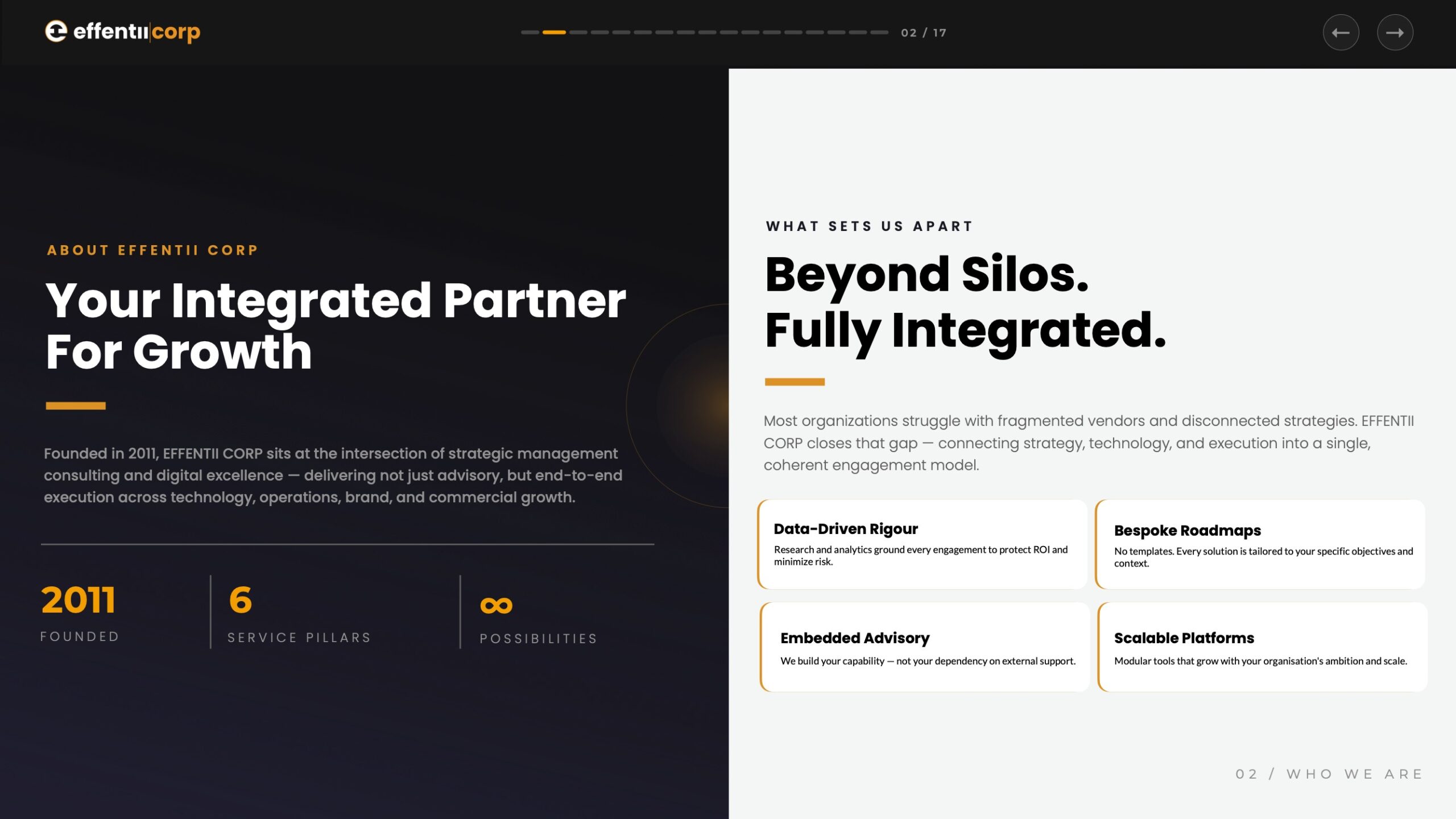
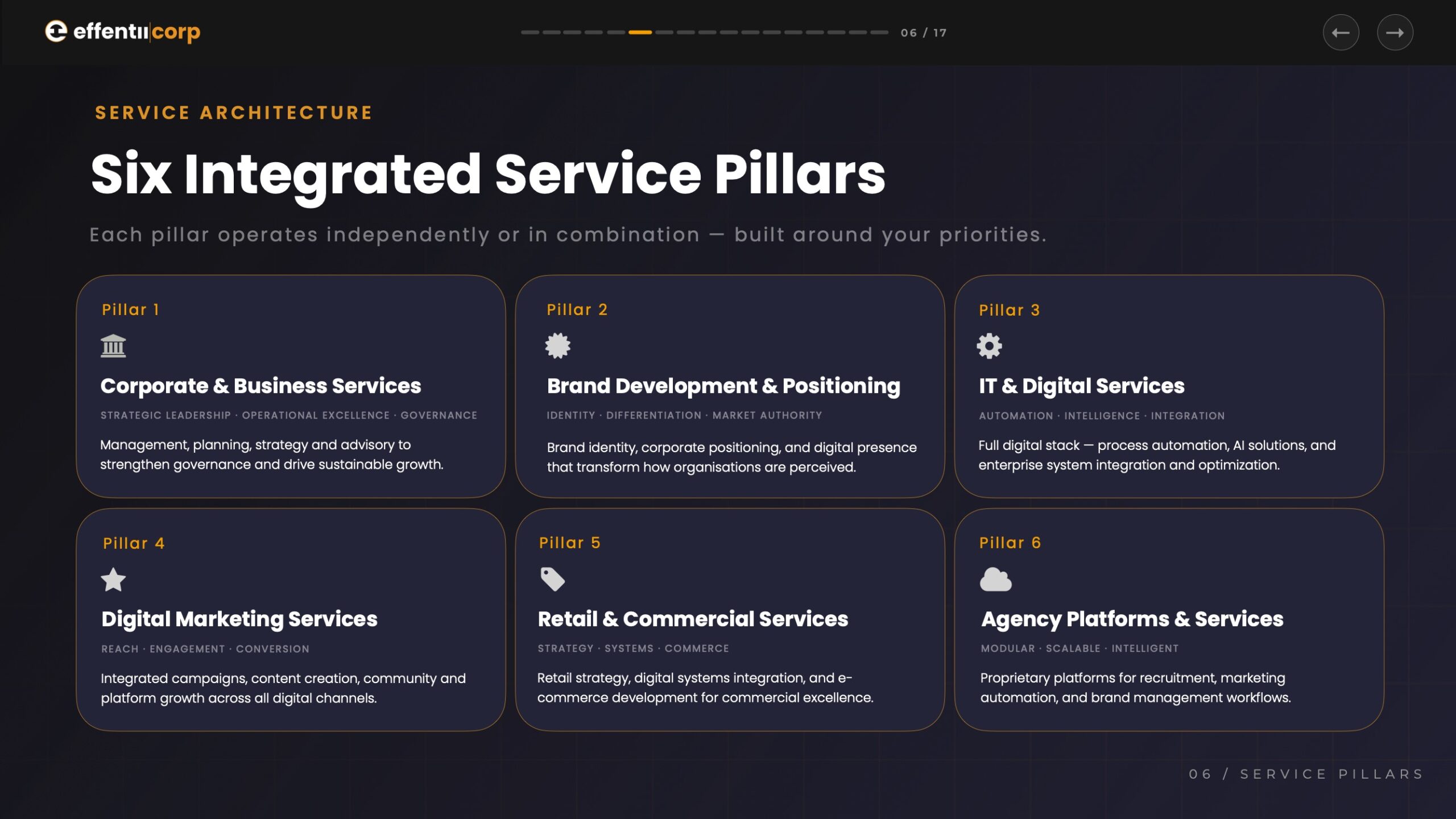
That’s the case for taking AI agent governance seriously. Governance is the precondition for return. An agentic AI governance framework separates pilots that stall from programmes that scale. It sits across our six integrated service pillars, where strategy, technology, and managed services meet, and it’s an operating model, not a software purchase.
Why AI pilot to production stalls: it isn’t the model
When an agent deployment stalls right after the demo, people reach for model quality as the reason. The evidence points somewhere else. The failure is structural.
In a survey of 1,000 process decision-makers at organisations with more than 1,000 employees across the US, UK, Germany, and France, 72% said process-related challenges had caused AI initiatives to fail, at an average cost of $1.55 million per organisation (Camunda). Fully 82% said their AI investment will be a bust without more investment in process redesign (Camunda).
The same study ties that operational gap straight to governance. 40% of organisations reported an AI-related compliance or governance issue in the past 12 months, and process problems contributed to 84% of those incidents (Camunda).
Under the process problem sits an accountability problem. Gartner is blunt: AI agents “are not legal entities and cannot be held responsible for the consequences of those actions” (Gartner). Through 2028, Gartner predicts more than 50% of AI initiatives will halt because of unresolved agentic identity. Who and what an agent is inside the organisation, and who answers for what it does (Gartner).
Add those up and the stall has a consistent shape. You bolt agents onto processes designed before AI existed. Nobody owns the decision rights. There’s no audit trail. The pilot stalls, or gets cancelled on cost and value grounds. That’s the cancellation Gartner forecasts.
The AI agent governance gap, in numbers
The governance gap is the default state. Deloitte surveyed 3,235 IT and business leaders across 24 countries, including the Middle East. Only 21% say they have a mature governance model for agentic AI (Deloitte). Roughly 80% lack the capabilities the report names directly: agent decision boundaries, real-time monitoring, and audit trails (Deloitte). If you’re outside that 21%, you’re in the majority.
The confidence figure is the damning one. In an October 2026 survey of 858 executives by CIO Dive and KPMG, published by OutSystems, 82% said they can keep pace governing AI agents. Only 26% could resolve conflicts between agents. Just 5% have automated controls or audit trails in place (OutSystems / CIO Dive / KPMG).
Confidence at 82%, capability at 5%. That’s a visibility gap, pure and simple. You can’t see what your agents are doing in enough detail to control them.
Encouragement runs ahead of control elsewhere too. OneTrust’s agentic AI governance survey found 47% of organisations actively encourage agent use while their governance and controls are still developing. That’s a 40-point gap between encouragement and clear governance (OneTrust).
And you can’t reliably tell a genuine agentic vendor from a rebadged one. Gartner estimates only about 130 of the thousands of vendors marketing “agentic AI” are real. It calls the problem “agent washing” (Gartner).
An agentic AI governance framework that protects ROI
Most coverage of AI agent governance treats it as risk containment: fences that stop agents doing harm. That framing turns governance into a cost centre. The organisations that convert agent spend into measurable return treat governance as the operating model that makes autonomy safe enough to scale. We build that operating model with your team, so the capability stays after we step back. That’s how EFFENTII works.
A governance framework built around return does three things, in sequence.
Move 1: Autonomy tiers and decision rights
Before an agent ships, give it a written answer to three questions. What may it do alone? What needs human approval? Who answers when it goes wrong? The cleanest way to make that concrete is an autonomy matrix: tiers that set a ceiling on each agent’s independent action.
A five-tier version looks like this.
- Tier 0, observe: the agent reads and reports, never acts.
- Tier 1, recommend: the agent proposes, a human decides.
- Tier 2, draft and approve: the agent does the work, a human signs it off before it leaves the building.
- Tier 3, act within guardrails: the agent executes inside pre-approved limits and notifies a human.
- Tier 4, full autonomy: the agent acts independently, with a human engaged only on exception.
The tiers exist to let each agent run at the highest level its task justifies. That’s where human-in-the-loop AI agents earn their place: at the tiers where mistakes are expensive and reversibility is low. Decision boundaries, more than blanket caution, are what Deloitte found missing in 80% of enterprises (Deloitte).
Move 2: Redesign the process before you deploy the agent
This is where the $1.55 million is lost. If 72% of AI failures trace to process, deploying an agent onto an unreconstructed process is engineering in a known failure (Camunda). Sequence matters. Map and redesign the process first. Then apply the agent to the redesigned process. That’s business process automation and AI applied in the right order. Deploy first and the agent inherits every broken handoff and unclear owner the process already had, and automates them faster.
Move 3: Instrument the audit trail and name a human owner
An AI agent audit trail is the difference between “the agent did something” and “we can show, step by step, what it did and who authorised it.” It’s the capability that survives an internal audit and a regulator’s questions.
The evidence says it’s almost universally absent. Deloitte found audit trails missing in roughly 80% of enterprises (Deloitte). OutSystems’ survey put automated controls and audit trails at just 5% of organisations (OutSystems / CIO Dive / KPMG).
Agents are not legal entities (Gartner), so accountability has to land on a named human for every agent in production. An audit trail without a named owner is a log. With an owner, it’s a governance record.
What governed AI agent ROI looks like
Where agent deployments are properly closed-loop, meaning governed, process-fit, and instrumented, the return is real. Basware’s 2026 report, based on 200 finance leaders, found agentic AI ROI at 80%, against 67% for AI overall and 35% in 2024. 72% of finance leaders said their deployed agents succeeded (Basware). Governed, closed-loop deployments pay. Ungoverned pilots get cancelled.
The gap between confidence and readiness runs deeper than tooling. Roughly a third of some 500 organisations surveyed are taking steps on responsible-AI practices spanning strategy, governance, and agentic controls (McKinsey AI Trust Maturity Survey, reported by TechTarget). Even where trust programmes exist, agentic governance lags the deployment pace.
The GCC overlay: mapping to SDAIA’s AI risk framework
If you operate in Saudi Arabia or the wider Gulf, a named method now sets how buyers and auditors score you. In July 2026, SDAIA launched the National AI Risk Management Framework (Saudi Press Agency).
The framework sets out a four-phase methodology: define context and scope, identify and assess, treat, and continuously monitor. It builds on seven principles, including accountability and transparency, and seven risk categories, scored on a likelihood-by-impact matrix (Saudi Press Agency). It’s a guidance reference for public and private entities alike, which in practice makes it the method large Saudi organisations will use to assess their suppliers (Saudi Press Agency). No fines are attached. The pressure is commercial, not regulatory.
That matters because the local deployment curve runs ahead of the governance curve. Saudi enterprises report AI in full production across multiple business functions at 46%, against a 21% global average. 99% report active investment in agentic AI, and 76% expect enterprise-wide ROI within 12 months (reported by KPMG Saudi Arabia, via Saudi Future Tech). Those figures are second-hand. Read them as directional. The direction is clear: agentic AI in Saudi Arabia is scaling faster than the governance meant to control it, and the SDAIA framework is the rubric that will now assess it.
The timing makes it sharper. 2026 is the Kingdom’s designated Year of AI, and AI-activity commercial registrations reached 24,552, up from 19,042 at the end of 2025 (Arab News). With the year closing in weeks, one question remains: did the spend convert into returns? If you have to justify a 2027 agent budget in Q4 planning, AI governance Saudi Arabia is a survival question now, not a policy discussion.
Where to start
The failure pattern here is structural, so the fix is structural too. Build autonomy tiers and decision rights. Redesign the process before deployment. Instrument the audit trail and name a human owner. That’s a governance operating model, not a tool purchase, and it’s where strategy, technology, and managed services meet.
If your agents are already in production and you can’t answer, for any one of them, what it may do alone, who approves the rest, and where its audit trail lives, that’s the first gap to close.
We build this operating model with your team, so the capability stays after we step back. At EFFENTII, our goal is to make ourselves redundant.
The alternative is already priced in: a $1.55 million average process failure, a 40% compliance-incident rate, and a 2027 cancellation window decided in this year’s Q4 planning cycle (Camunda; Camunda; Gartner). A governance readiness assessment, or a 30-minute review of your current agent portfolio against the three moves above, is the fastest way to see how exposed you are before that window opens.
This article was drafted from a cited research brief. All statistics are attributed to the sources named above. Figures marked “reported” are second-hand and should be treated as directional.