In today’s competitive landscape, continuous improvement is not just an advantage, it is a necessity. Many organizations reach an inflection point where internal expertise, bandwidth, or perspective limits their growth. This is where engaging a business improvement consultant can be transformative. However, the decision to hire one and the selection process itself are critical undertakings that require careful strategy. This guide provides a comprehensive framework for business leaders, IT managers, and transformation specialists to navigate this process successfully. We will outline what to look for, how to evaluate potential partners, and specifically how a partner like Effentii Corp brings a unique blend of strategic insight and technical execution to deliver measurable, sustainable business improvement.
Understanding the Role of a Business Improvement Consultant
A business improvement consultant is more than an advisor. They are a catalyst for change. Their primary role is to objectively analyze your organization’s people, processes, and technology to identify inefficiencies, uncover opportunities, and design and implement solutions that drive tangible value. This can encompass a wide range of focus areas, including but not limited to operational efficiency, digital transformation, supply chain optimization, customer experience enhancement, and financial performance improvement. According to a McKinsey study on transformations, success is significantly higher when organizations bring in an objective external perspective to challenge existing paradigms.
Key Signs You Need a Business Improvement Consultant
How do you know it is the right time to seek external expertise? Look for these indicators within your organization.
- Persistent Operational Inefficiencies: Recurring bottlenecks, rising costs without clear cause, or consistent delays in delivery or service.
- Stalled Digital Transformation Initiatives: Projects that are over budget, behind schedule, or failing to deliver the expected return on investment.
- Inability to Scale: Current processes and systems crack under the pressure of growth, leading to errors and customer dissatisfaction.
- Lack of Internal Objectivity: Teams are too close to the problems or entrenched in “the way we’ve always done it,” making disruptive innovation difficult.
- Need for Specialized, Temporary Expertise: You require deep knowledge in a specific area, such as implementing an ERP system, optimizing a DevOps pipeline, or designing a new data governance framework, but lack it in-house.
The Consultant Selection Framework: A Step by Step Process
Following a structured process ensures you find a partner aligned with your specific challenges and culture.
- Define Your Core Objectives and Scope: Before speaking to any consultant, crystallize what success looks like. Is it a 20% reduction in process cycle time? A 15-point increase in customer satisfaction? A successful cloud migration? Be as specific and measurable as possible. This becomes your project charter and evaluation criteria.
- Identify the Right Type of Partner: Consultants range from large generalist firms to niche boutique specialists. Consider your needs. Do you require a broad strategic overhaul or a deep technical implementation? A firm like Effentii Corp operates in the sweet spot, offering strategic business consulting underpinned by practical IT services expertise, ensuring recommendations are both visionary and executable.
- Conduct a Rigorous Evaluation:
- Case Studies and References: Look for proven experience in your industry or with your specific challenge. Ask for and contact past clients to understand the consultant’s working style and results delivered.
- Methodology and Approach: Do they have a clear, structured framework? For example, Effentii Corp emphasizes a collaborative, data-driven approach, often starting with a discovery phase to fully diagnose the problem before proposing solutions.
- Team Expertise: Assess the credentials and experience of the actual team members who will be working on your project. Look for a blend of business acumen and technical depth.
- Cultural Fit: The consultant will be working closely with your team. Ensure their values, communication style, and collaboration ethos align with your organization’s culture.
- Structure a Collaborative Engagement: The proposal should clearly outline phases, deliverables, timelines, costs, and key performance indicators (KPIs). The best engagements are partnerships, not vendor relationships. Ensure there is a plan for knowledge transfer to your internal team to sustain improvements after the consultant’s engagement ends.
What to Look For: Essential Abilities and Skills
Beyond a good resume, top tier consultants and firms exhibit these critical abilities.
- Strategic Vision with Executional Grit: The ability to see the big picture and chart a course, coupled with the practical know how to navigate the day to day hurdles of implementation. This is a core differentiator for Effentii Corp, as they bridge the gap between business strategy and IT execution.
- Data Driven Diagnostics: They should base recommendations on data and evidence, not just gut feeling or best practices. This involves sophisticated analysis of operational metrics, financial data, and customer feedback.
- Change Management Proficiency: Any improvement initiative changes how people work. The consultant must have a robust plan for managing this change, including stakeholder communication, training, and addressing resistance.
- Technical Fluency: In the modern business landscape, improvement is often enabled by technology. A consultant must understand the potential and limitations of key technologies like cloud platforms, data analytics tools, automation software, and AI to recommend feasible, powerful solutions.
- Exceptional Communication: They must translate complex findings into clear, actionable insights for both executive leadership and frontline employees, and facilitate workshops effectively.
How Effentii Corp Delivers Business Improvement
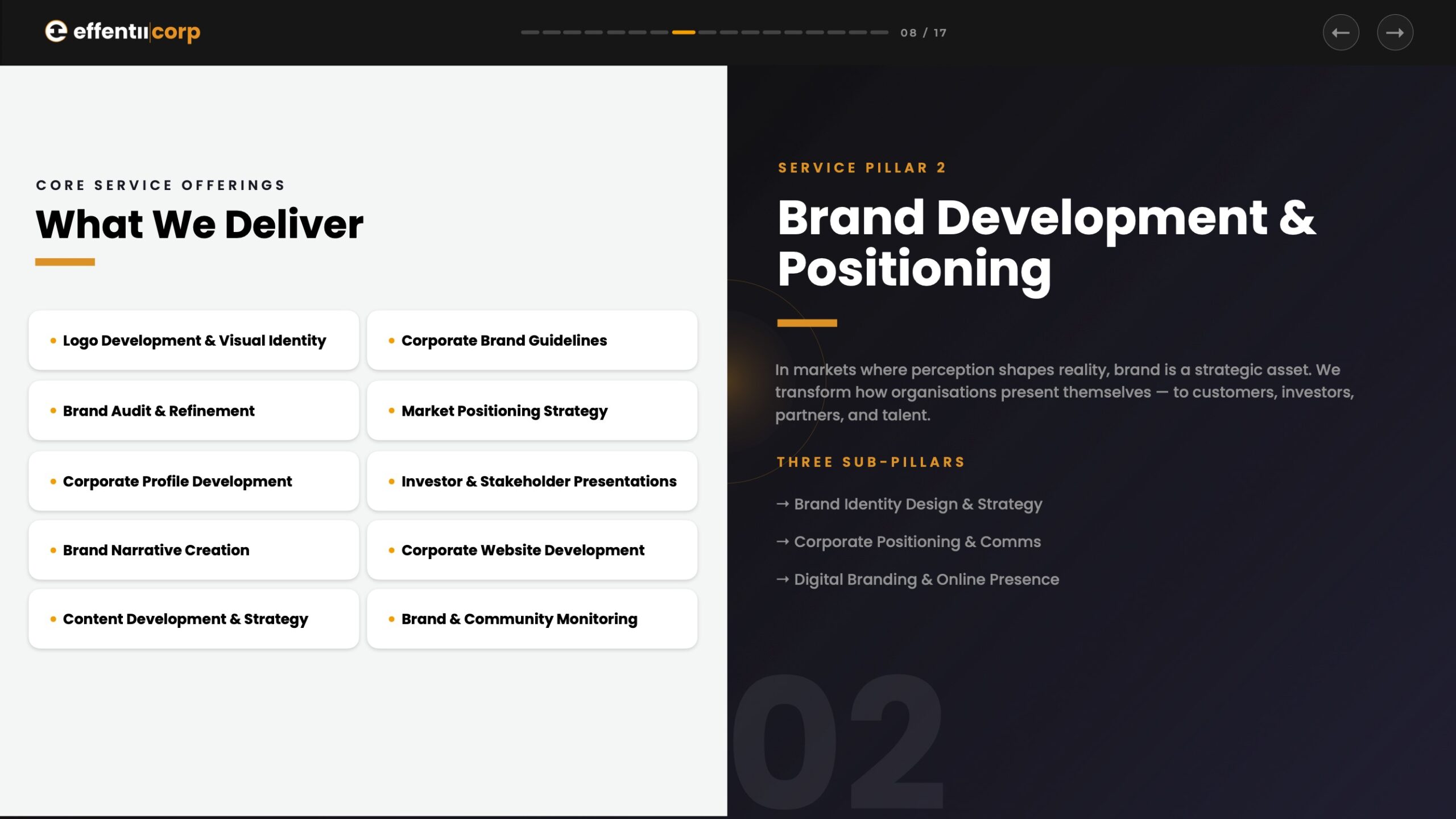
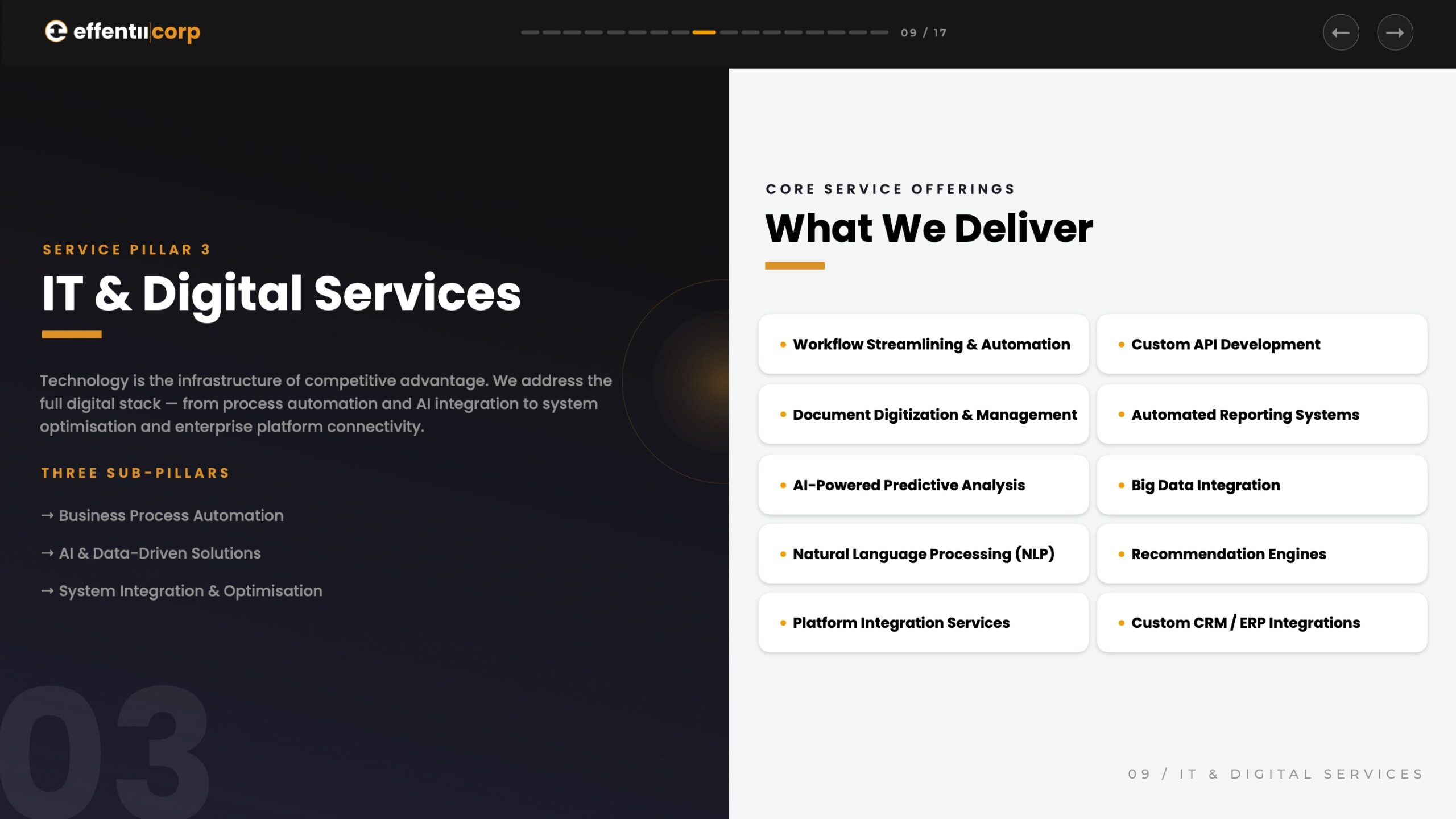
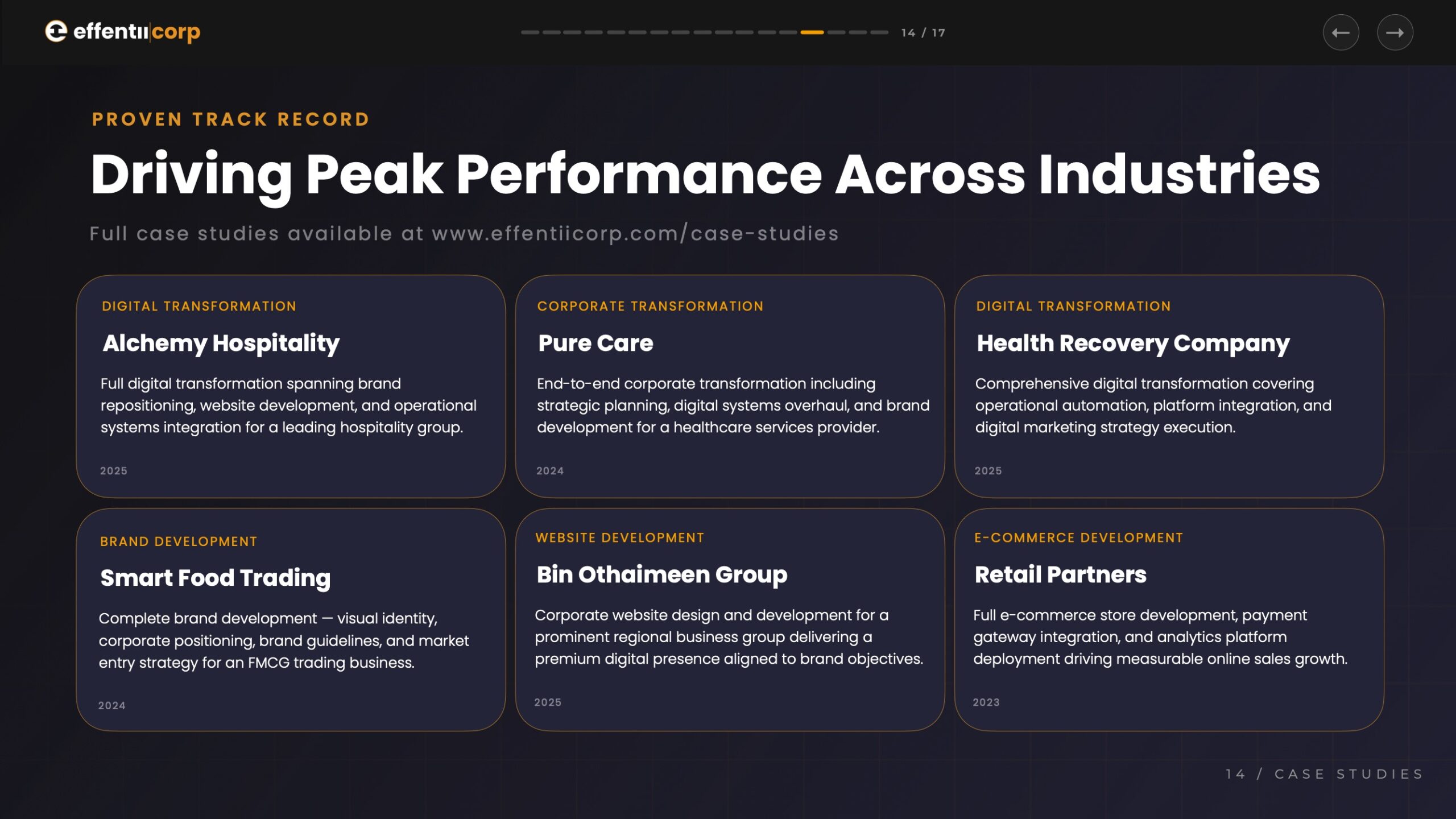
Effentii Corp exemplifies the modern consultancy needed for today’s challenges. Their model integrates three key strengths that directly address the selection criteria above.
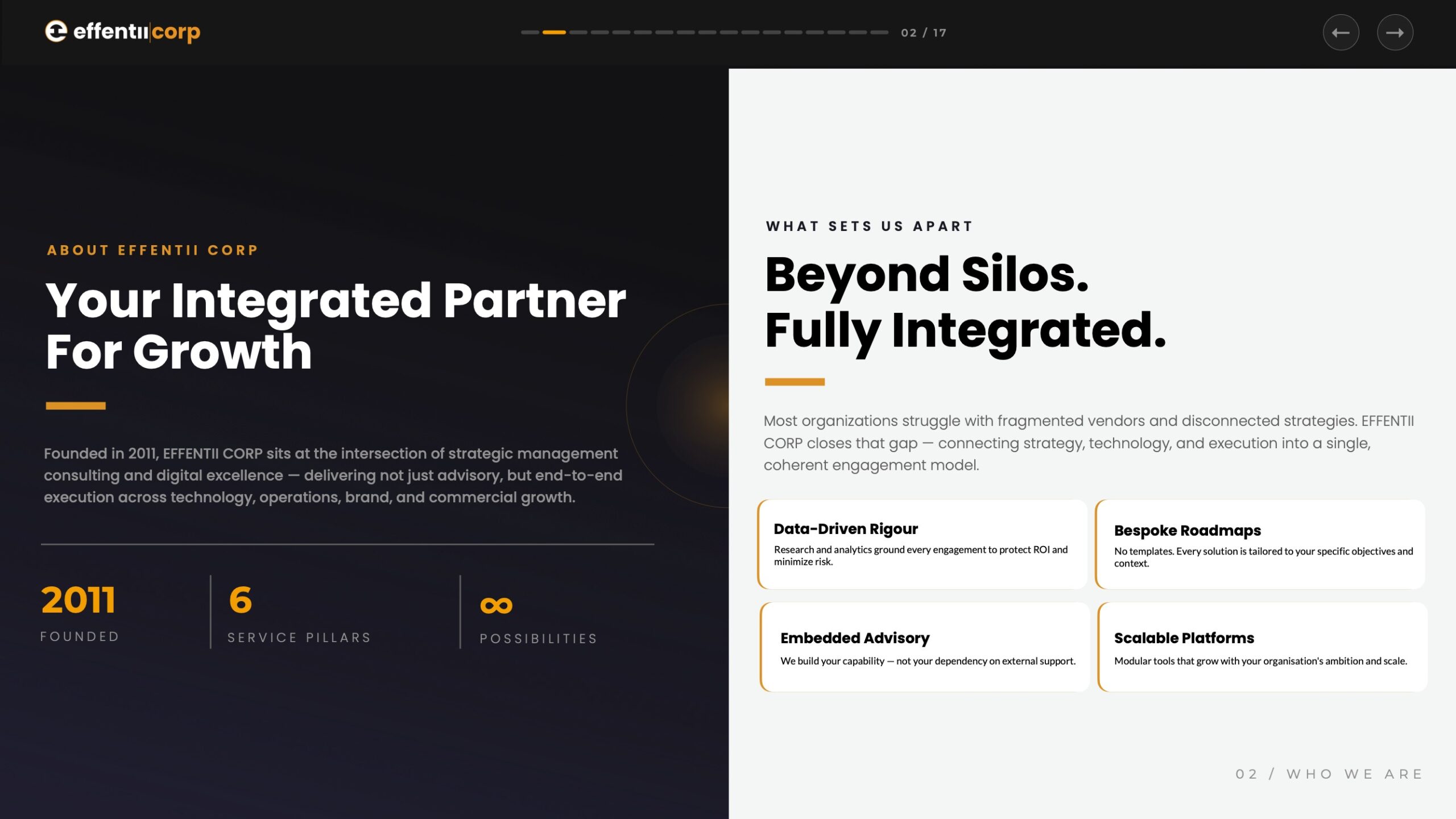
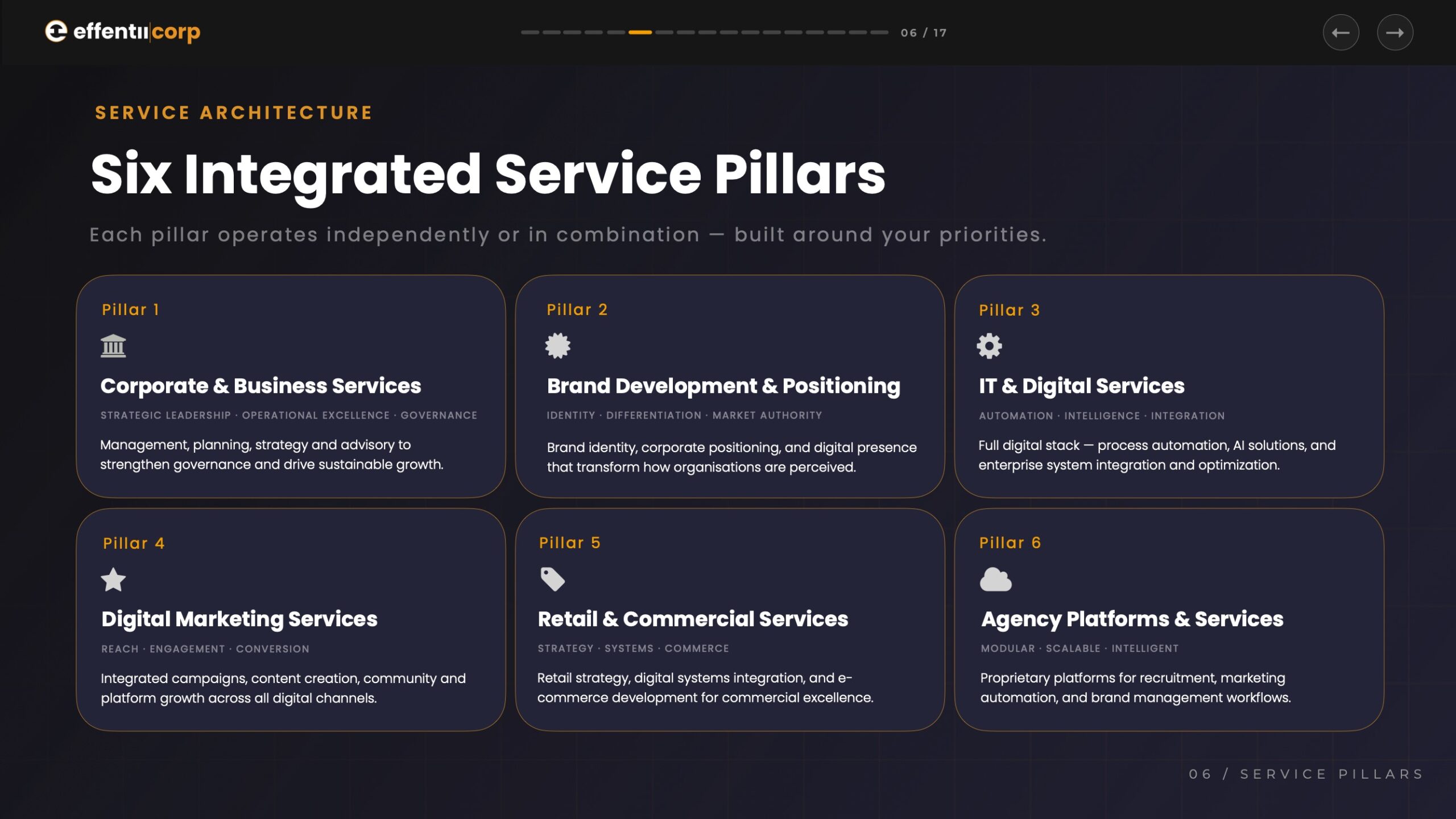
- Holistic, Integrated Perspective: They do not silo business strategy from IT implementation. Their offerings combine digital transformation consulting, business process improvement, and IT services into a cohesive service portfolio. This means they can not only design an improved customer journey map but also architect and integrate the CRM and data platform needed to make it a reality.
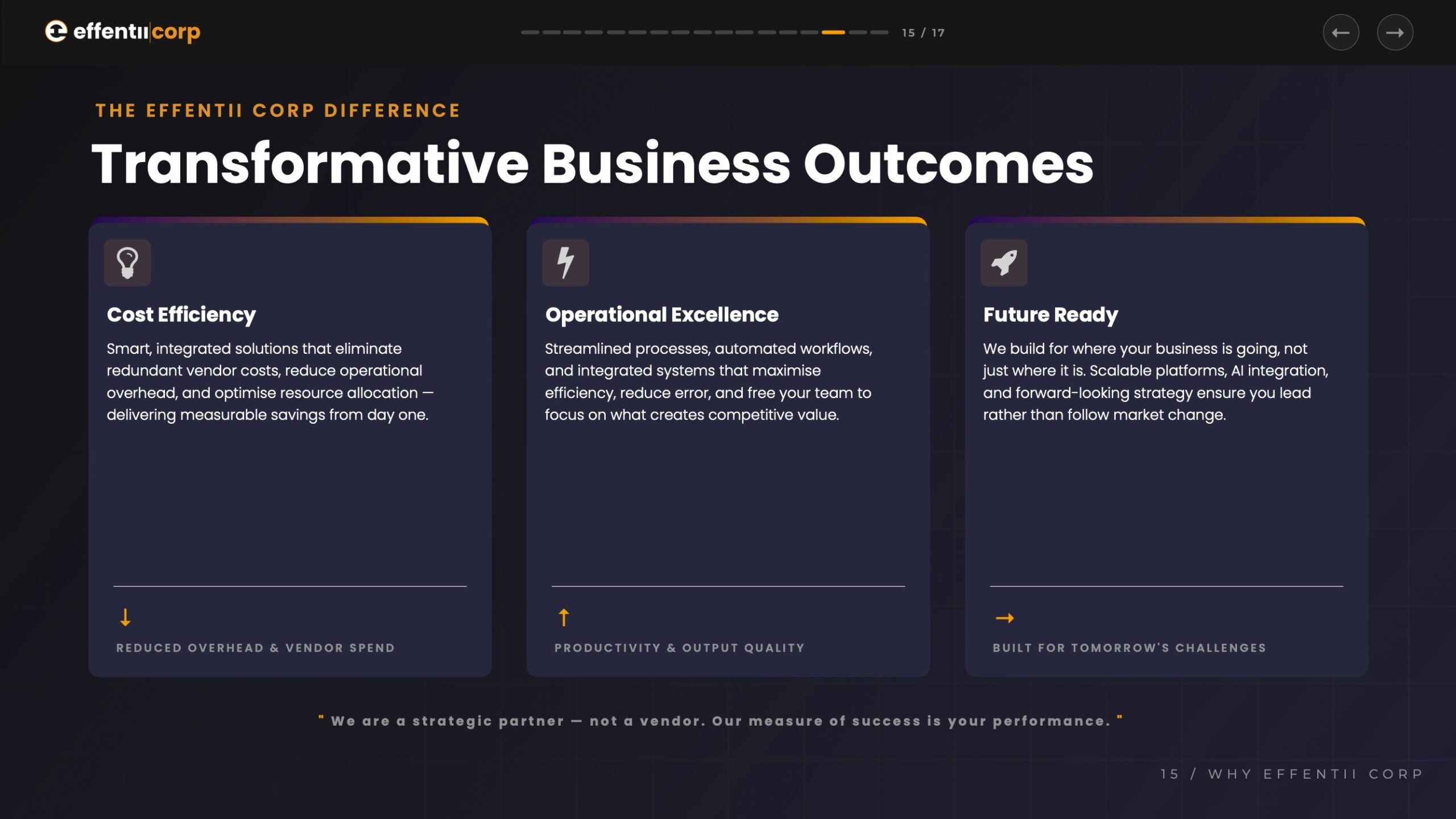
- Focus on Sustainable Outcomes: Their approach appears centered on creating lasting value for clients. This involves co creating solutions with client teams and prioritizing knowledge transfer, ensuring that improvements are owned and maintained internally long after the project concludes.
- Adaptive and Collaborative Methodology: They emphasize understanding the unique context of each client before prescribing solutions. This client specific diagnostic phase ensures recommendations are tailored and practical, avoiding the pitfalls of a one size fits all template.
For a company facing a complex challenge like modernizing legacy systems while improving operational workflows, Effentii Corp’s combined expertise allows them to manage the interdependencies between business process redesign and the technical migration, reducing risk and accelerating time to value.
Maximizing the Return on Your Consulting Investment
To ensure you get the most from your engagement, follow these best practices.
- Appoint a Strong Internal Lead: Designate a knowledgeable, empowered internal project sponsor who can make decisions, provide context, and remove organizational barriers.
- Foster Full Transparency: Share all relevant data, good and bad. Encourage open dialogue and constructive challenge between your team and the consultants.
- Focus on Measurable Milestones: Break the project into phases with clear, quantifiable deliverables. Regularly review progress against these milestones and the original KPIs.
- Plan for Life After the Project: From day one, discuss and plan for the transition. Who internally will own the new process or system? What training is required? How will continuous improvement be managed?
Conclusion: Investing in Expert Partnership
Hiring a business improvement consultant is a significant strategic investment. Done correctly, it can unlock efficiency, accelerate growth, and build capabilities that provide a durable competitive edge. The key lies in a deliberate selection process focused on finding a partner who brings not just analysis, but actionable execution, not just ideas, but a partnership for change. By looking for strategic vision, executional capability, data driven rigor, and change management skill, you will identify a firm capable of delivering real transformation. For leaders seeking a partner that seamlessly connects business ambition with technical reality, exploring the integrated approach of a consultancy like Effentii Corp is a prudent step toward achieving your improvement goals.
Frequently Asked Questions (FAQ)
How much does it cost to hire a business improvement consultant?
Costs vary widely based on the firm’s size, the project’s scope, duration, and the expertise required. Engagements can be structured as fixed-price projects, monthly retainers, or time-and-materials. The most important factor is the expected return on investment (ROI). A reputable consultant will work with you to define the value proposition and ensure the cost is justified by the anticipated financial and operational improvements.
What is the typical duration of a business improvement consulting engagement?
There is no standard duration. A focused process optimization review might take 4-8 weeks. A full scale digital transformation program could last 6-18 months or more. Most consultants recommend starting with a defined discovery or assessment phase (often 2-4 weeks) to precisely scope the problem and the subsequent work, providing clarity on timeline and investment before proceeding.
How do we measure the success of the engagement?
Success should be measured against the specific, measurable Key Performance Indicators (KPIs) agreed upon at the project’s outset. These could be financial (cost savings, revenue increase), operational (cycle time reduction, error rate decrease), or customer focused (NPS improvement, satisfaction score increase). Regular reporting against these KPIs throughout the project is essential.
Will the consultant’s changes disrupt our current operations?
A skilled consultant minimizes disruption by using a phased approach. They will pilot changes in a controlled environment, manage the transition carefully, and often run new and old processes in parallel before a full cutover. Their change management plan should explicitly address how to maintain business continuity during implementation.
Why choose a firm like Effentii Corp over a large, well known consultancy?
Boutique and specialized firms like Effentii Corp often provide greater senior-level attention, more flexibility, and deeper niche expertise in the intersection of business and technology. They can act as a true extension of your team, offering a integrated service model where strategy and implementation are managed by one cohesive unit, often leading to faster execution and less internal coordination overhead compared to engaging multiple specialized firms.