Digital transformation is a term that is frequently used in today’s quickly changing business environment. Digital transformation, however, is the process of integrating digital technology into every facet of a business, thereby transforming the way it functions and provides value to its clientele. It involves rethinking customer experiences, business models, and even business processes in addition to simply implementing new technologies. It is impossible to overestimate the significance of digital transformation.
Businesses that don’t embrace digital transformation run the risk of becoming outdated in a world where technology is developing at a rate never seen before. Long-term survival & success require digital transformation; it is no longer an option. The current corporate environment is necessitating digital transformation for a number of reasons. Changing customer expectations and behavior are among the important factors.
Customers are becoming more demanding, informed, and connected as a result of the growth of digital technologies. Customers anticipate streamlined and customized interactions via all channels, including social media, mobile apps, and websites. Companies who fall short of these standards run the risk of losing clients to rivals who can provide a better digital experience. Agility and flexibility are essential for business operations, which is another factor. Conventional business processes and models are frequently inflexible and take a long time to adjust to shifting market conditions.
However, companies can now be more flexible and quick to adapt to changing market conditions thanks to digital technologies. For instance, cloud computing enables companies to quickly scale up or down operations in response to demand. In the hectic and uncertain business world of today, this agility is essential. In addition, as more startups and industry disruptors enter the market, the competitive environment has grown more intense.
| Metrics | Data |
|---|---|
| Number of businesses that have undergone digital transformation | 45% |
| Percentage increase in revenue for businesses that have undergone digital transformation | 25% |
| Percentage decrease in operating costs for businesses that have undergone digital transformation | 30% |
| Percentage increase in customer satisfaction for businesses that have undergone digital transformation | 40% |
| Percentage increase in employee productivity for businesses that have undergone digital transformation | 20% |
Businesses must constantly innovate and set themselves apart if they want to stay ahead of the competition. The capacity and instruments to do so are offered by digital transformation. Businesses can make data-driven decisions, obtain insightful information, and develop distinctive value propositions by utilizing technologies like artificial intelligence, machine learning, and big data analytics.
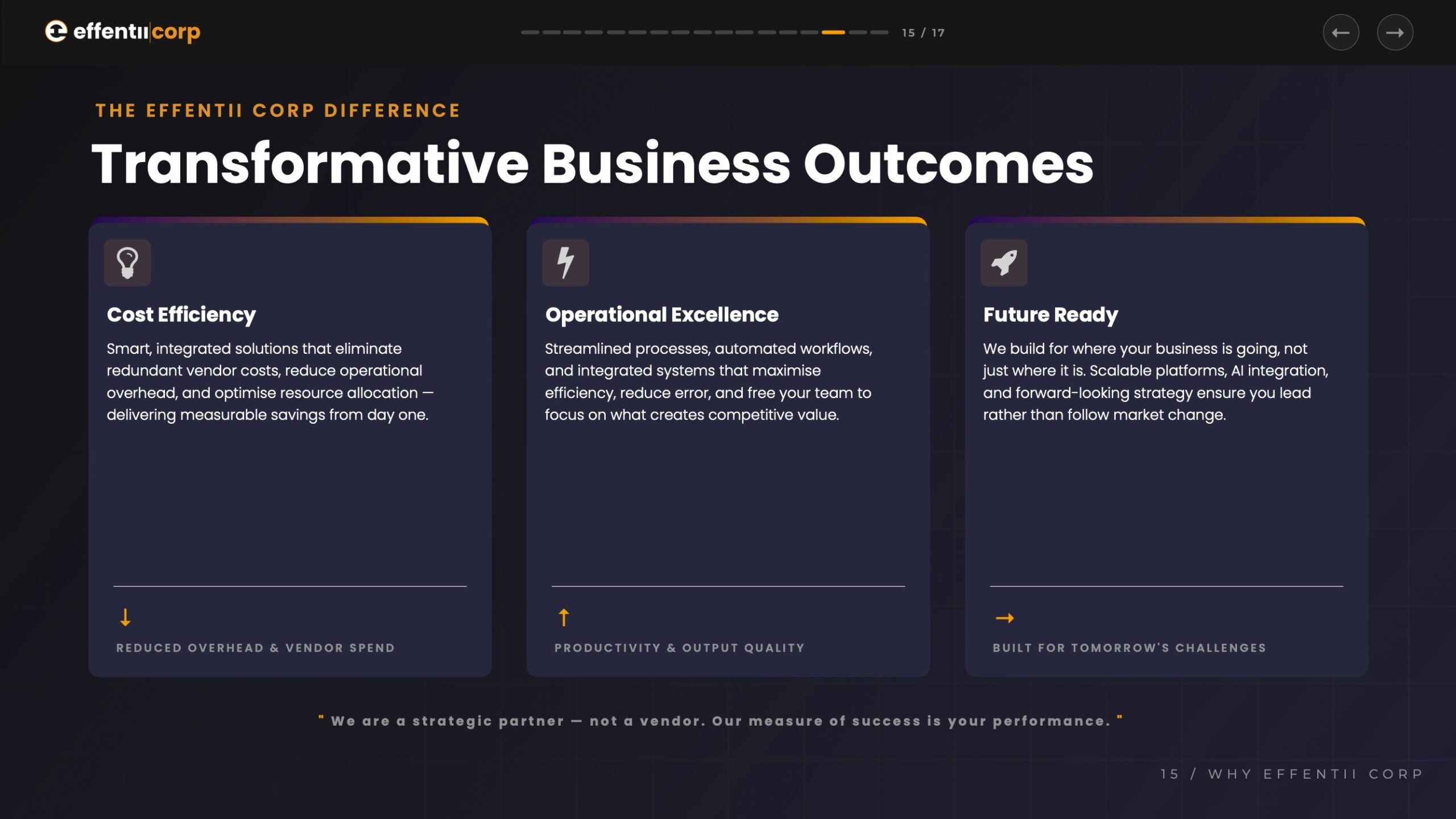
Business processes are greatly impacted by digital transformation, which boosts data-driven decision making, efficiency, and customer satisfaction. Process simplification and improved productivity are two of the main advantages of the digital transformation. Businesses can cut expenses, increase productivity, & remove human error by digitizing and automating manual and repetitive tasks. Digital workflows and document management systems, for instance, can expedite approval procedures and cut down on the time and effort needed to finish tasks. Employee focus can be directed toward more value-added tasks as a result, which also increases operational efficiency.
Offering a better customer experience and engagement is another benefit that digital transformation gives businesses. Businesses are able to anticipate customer needs, personalize customer interactions, and deliver timely & relevant information thanks to digital technologies. E-commerce platforms, for instance, can use consumer data to make product recommendations based on their preferences and past purchases. This boosts customer satisfaction & loyalty in addition to improving the customer experience. Businesses can also make data-driven decisions thanks to digital transformation.
Businesses now have access to enormous amounts of data thanks to the widespread use of digital technologies. Businesses can gain important insights from this data by utilizing big data analytics, which enables them to make wise decisions & spur company expansion. Retailers, for instance, can use customer data analysis to spot trends and patterns, improve inventory control, & target marketing campaigns. Using data to inform decisions helps businesses make better decisions and stay one step ahead of their competitors. Businesses in all industries are undergoing a digital transformation thanks to a number of important technologies.
The Internet of Things (IoT), cloud computing, big data analytics, and artificial intelligence and machine learning are some of these technologies. A key technology that supports digital transformation is cloud computing. Instead of using local servers or desktop computers, it enables businesses to store and access data & applications over the internet. This facilitates enterprises to swiftly expand their activities, lower the cost of infrastructure, and enhance accessibility and cooperation. Businesses can experiment with new technologies & business models with the freedom that cloud computing offers, all without having to make large upfront investments. Businesses are operating in a completely new way thanks to machine learning and artificial intelligence.
Artificial Intelligence (AI) is the simulation of human intelligence in machines, allowing them to carry out tasks like speech recognition, image analysis, & decision making that normally require human intelligence. A subset of artificial intelligence called machine learning (ML) is concerned with statistical models and algorithms that let computers learn from data and get better over time. Applications for AI and ML in business are numerous and include fraud detection, predictive analytics, chatbots, and virtual assistants.
The network of physical objects, including cars, appliances, and other items, that are embedded with sensors, software, and connectivity to allow them to gather and share data is known as the Internet of Things, or IoT. The Internet of Things (IoT) has the power to revolutionize sectors including manufacturing, healthcare, & transportation. IoT can facilitate predictive maintenance, supply chain optimization, and real-time equipment and process monitoring in the manufacturing industry, for instance. In addition to increasing operational effectiveness, this helps companies provide their clients with higher-quality goods & services. Digital transformation is also being fueled by big data analytics.
Businesses now have access to enormous volumes of data thanks to the widespread use of digital technologies. Through the use of big data analytics, companies can mine this data for insightful knowledge that helps them make wise decisions & spur expansion. Retailers can use consumer data analysis, for instance, to spot trends and patterns, improve inventory control, and tailor advertising campaigns. Businesses can stay ahead of the competition and make better decisions thanks to this data-driven approach.
Businesses can gain from digital transformation in a number of ways, such as higher revenue and profitability, better customer satisfaction and loyalty, and higher employee productivity and engagement. Enhanced revenue and profitability are two of the main advantages of the digital transformation. Businesses may reach new markets, grow their clientele, and boost revenue by utilizing digital technologies. E-commerce platforms, for instance, let companies sell their goods & services to clients all over the world, around-the-clock. This raises sales and lowers expenses related to conventional brick-and-mortar stores. Digital transformation also helps companies streamline their processes, cut down on waste, & boost productivity, which lowers costs and boosts profitability.
Also, digital transformation increases client loyalty and satisfaction. Digital technologies enable businesses to provide their customers with seamless, personalized experiences across all touchpoints. This improves customer happiness and loyalty while also improving the customer experience. For instance, banks can give their clients access to mobile banking apps so they can pay their bills, transfer money, and check the balances of their accounts from any location. In addition to raising customer happiness, this accessibility and convenience also boost repeat business and loyalty.
Digital transformation also raises staff engagement and productivity. Employers can free up staff members to concentrate on higher-value tasks by automating manual and repetitive processes. Employee engagement & satisfaction both rise as a result of increased productivity. For instance, regardless of location, employees can collaborate and communicate more effectively thanks to digital workflows and collaboration tools.
This raises employee engagement & satisfaction in addition to fostering better teamwork. The advantages of digital transformation are obvious, but putting it into practice is not without difficulties. Integration with legacy systems, a lack of digital skills and knowledge, and resistance to change are a few of the major obstacles. Among the most difficult things about implementing digital transformation is resistance to change. Many employees may oppose change because it can be disruptive and unsettling.
They might worry that machines will take their jobs or that they won’t be able to adjust to new technologies. Businesses must engage staff members in the process & explain the advantages of the digital transformation to overcome this obstacle. In order to help staff members acquire the digital knowledge & abilities needed for the new digital era, they must also offer training and support.
Lack of knowledge & experience with digital technologies is another issue. Many businesses lack the digital know-how and proficiency needed to successfully integrate & utilize digital technologies. This may make efforts to transform the digital world less successful.
Employers must fund training and development initiatives to help staff members become more skilled in order to meet this challenge. To close the skills gap, they can also collaborate with consultants and digital agencies or recruit outside talent. One more difficulty in putting digital transformation into practice is integration with legacy systems. Due to their incompatibility with modern digital technologies, many businesses have made significant investments in outdated systems. It can be difficult and time-consuming to integrate these outdated systems with modern digital technologies.
Businesses must design a well-defined integration strategy and roadmap in order to overcome this obstacle. To make sure that legacy systems are compatible and interoperable with new digital technologies, they might need to update or replace them. Businesses should adhere to best practices, which include creating a defined digital strategy, fostering an innovative and experimental culture, & investing in digital skills & capabilities, to ensure a successful digital transformation. A successful digital transformation requires the development of a clear digital strategy.
Companies must create a plan to accomplish their digital vision, goals, and objectives. This entails determining the resources and investments required in addition to the technologies and capabilities needed. A well-defined digital strategy guarantees coherence and concentration for the entire company. Another crucial step is to foster an innovative and experimental culture.
A change in perspective as well as a willingness to take chances and try out novel concepts and technological advancements are necessary for digital transformation. Companies must promote a culture that values innovation, teamwork, and lifelong learning. This entails giving staff members the flexibility to experiment and come up with new ideas, encouraging creativity, & fostering an environment that is safe for both failure and learning.
Investing in digital competencies and skills is an additional essential element for success. In order to successfully implement and utilize digital technologies, businesses must guarantee that their staff members possess the requisite digital skills and knowledge. This entails supplying training & development courses, employing outside personnel, and collaborating with consultants & digital agencies. Businesses can successfully execute digital transformation projects by investing in digital skills and capabilities, which also gives them a competitive edge in the digital age.
There are countless instances of businesses that have successfully embraced digital transformation, transforming their operations and results. Amazon is one such instance. Originally an online bookshop, Amazon has grown to become the biggest online retailer in the world. Amazon has completely changed the way people shop by upending conventional retail models through digital transformation. Amazon has established itself as the preferred online shopping destination thanks to its enormous selection, affordable prices, and tailored recommendations.
To enhance customer satisfaction, streamline operations, & spur corporate expansion, Amazon has also made use of digital technologies like artificial intelligence & big data analytics. Netflix is an additional example. Initially a DVD rental service, Netflix has evolved into a well-known streaming provider. Netflix has completely changed the way people watch television and make movies, as well as how they consume entertainment, through digital transformation.
Utilizing digital technologies like big data analytics and cloud computing, Netflix has been able to provide its subscribers with personalized and on-demand content at any time and from any location. This has improved client satisfaction and loyalty while also allowing Netflix to grow internationally and take the lead in the entertainment sector. Digital transformation in business has a bright and exciting future ahead of it. New technologies with the potential to further revolutionize business outcomes & operations include 5G, virtual reality, and blockchain.
For instance, blockchain has the power to revolutionize the financial, supply chain, & healthcare sectors. Data sharing and safe, transparent transactions are made possible by blockchain, a distributed, decentralized ledger technology. It does away with the need for middlemen and offers a transaction record that cannot be tampered with. This could lead to lower expenses, more productivity, and enhanced trust & transparency in corporate operations.
Industries like gaming, retail, and education could be completely changed by virtual reality (VR) and augmented reality (AR). AR superimposes digital data on the physical world, whereas VR submerges users in a virtual world. With the help of these technologies, companies can provide their clients engaging and dynamic experiences. Retailers, for instance, can use VR and AR to build virtual showrooms where customers can virtually try on merchandise. This boosts sales & lowers returns while also improving the customer experience.
The upcoming 5G wireless technology has the potential to completely transform sectors including manufacturing, transportation, and telecommunications. Compared to prior generations of wireless technology, 5G offers higher capacity, lower latency, and faster speeds. Businesses can now connect more devices & sensors, gather and analyze more data in real time, and launch new services and applications thanks to this. For instance, 5G can facilitate remote robot control, predictive maintenance, and real-time equipment & process monitoring in the manufacturing industry.
This increases operational effectiveness & empowers companies to provide their clients with higher-quality goods and services. Ultimately, in the quickly changing business environment of today, digital transformation is a need for companies rather than an option. Reimagining business processes, customer experiences, & even business models is just as important as simply putting new technologies into use.
Improved customer satisfaction & loyalty, higher employee productivity & engagement, and increased revenue and profitability are just a few advantages of the digital transformation. Digital transformation implementation is not without difficulties, though. In addition to addressing the lack of digital skills and expertise, businesses also need to overcome resistance to change and integrate new technologies with legacy systems. Businesses should adhere to best practices like creating a clear digital strategy, fostering an innovative and experimental culture, and investing in digital skills and capabilities in order to ensure a successful digital transformation.
The digital transformation has a bright & promising future. New technologies that have the potential to further revolutionize business outcomes and operations include 5G, virtual reality, & blockchain. Businesses must embrace digital transformation, constantly innovate, and adapt to new technologies & market conditions if they want to stay ahead of the competition and prosper in the digital age. Now is the moment to embrace digital transformation.
If you’re interested in learning more about the latest developments in digital transformation, you might want to check out this article on Effentii Corp’s website. It discusses key retail developments in Latin America during Q3 and how they are embracing digital technologies to stay competitive in the market. To read the full article, click here.